

text stringlengths 205 8.62k | correct_letter stringclasses 4
values | enhanced_prompt stringlengths 117 9.01k | enhanced_completion stringlengths 1 10.2k | reasoning_trace stringlengths 372 57.7k | answer stringclasses 114
values | category stringclasses 6
values | format stringclasses 4
values | original_context stringlengths 52 131 | response_constraints stringlengths 809 1.13k | section stringclasses 12
values | source stringclasses 56
values | source_id stringlengths 0 37 |
|---|---|---|---|---|---|---|---|---|---|---|---|---|
<start_of_turn>user
Ddamu ekibuuzo kino ekikwata ku lulimi Oluganda. Wa okuddamu kwokka, tofaayo ku kintu kirala kyonna.
Akasembayo ak'obumu ku mannya ag'ekibiina 7 nga 'Ekitabo' kiki?<end_of_turn>
<start_of_turn>model
eki-<end_of_turn> | null | <start_of_turn>user
Ddamu ekibuuzo kino ekikwata ku lulimi Oluganda. Wa okuddamu kwokka; tofaayo ku kintu kirala kyonna.
Akasembayo ak'obumu ku mannya ag'ekibiina 7 nga 'Ekitabo' kiki?
<start_of_turn>model
eki-<end_of_turn>
short_form
eki-
fln_shortform_synthetic
Morphology & Concord
<end_of_turn> | eki- | The user is asking in Luganda about noun class prefixes. Let me parse the question carefully.
"Akasembayo ak'obumu ku mannya ag'ekibiina 7 nga 'Ekitabo' kiki?"
Breaking this down:
- "Akasembayo" - the last/final one
- "ak'obumu" - of the beginning / initial part
- "ku mannya" - of the names / nouns
- "ag'ekibiina 7" ... | eki- | Morphology & Concord | short_form | short_form
eki-
fln_shortform_synthetic
Morphology & Concord
| # Constraints
The question you must answer is from a language domain. You are a seasoned Luganda linguist and lexicographer based in Kampala, Uganda, with decades of experience documenting Bantu morphology. Your expertise lies in noun class systems, concord rules, and the etymological evolution of Luganda vocabulary. Y... | fln_shortform_synthetic | ||
<start_of_turn>user
Answer with only the letter (A, B, C, or D). Do not explain.
Omuyizi atabudde 'Omuntu' ne 'Abantu'. Onnyonnyola otya enjawulo ey'ekisenge (morphological difference) ey'amannya gano?
(A) 'Omu-' kissa amakulu g'omuntu omu, ate 'Aba-' kissa amakulu g'abantu abangi.
(B) Amannya gano galina obutafaanana... | A | # Instructions
- Answer with **only** the letter corresponding to the correct option (A, B, C, or D).
- Do **not** provide any explanation, reasoning, or additional text.
# Question
Omuyizi atabudde 'Omuntu' ne 'Abantu'. Onnyonnyola otya enjawulo ey'ekisenge (morphological difference) ey'amannya gano?
(A) 'Omu-' kissa... | A | Let me read this question carefully. It's in Luganda, and it's asking about the morphological difference between "Omuntu" (person) and "Abantu" (people).
Let me break down the question: "Omuyizi atabudde 'Omuntu' ne 'Abantu'. Onnyonnyola otya enjawulo ey'ekisenge (morphological difference) ey'amannya gano?"
So it's a... | Literacy | mcq_if | mcq_if
fln_synthetic_oral_language_if
syn_oral_language_357_if
Literacy
| # Constraints
The question you must answer is from a language domain. You are a seasoned Luganda linguist and professor at Makerere University, specializing in Bantu morphosyntax. With decades of experience teaching native and non-native speakers, you possess deep expertise in noun class systems and agreement rules. Yo... | fln_synthetic_oral_language_if | syn_oral_language_357_if | ||
<start_of_turn>user
Ddamu ekibuuzo kino ky'okulonda mu Luganda. Kozesa ennukuta (A, B, C, oba D) yokka.
Okuyiga vocabulary okw'okuziyiza (incidental vocabulary learning) kukola kutya?
(A) Omuyigiriza ayigiriza buli kigambo ekipya mu ngeri etegeekeka.
(B) Abayizi bayiga ebigambo ebipya nga basoma oba nga bawuliriza awa... | B | <start_of_turn>user
Wano wali ekibuuzo ky'okulonda. Somanga ekibuuzo n'okulonda kw'ebizibu, oluvannyuma owerereze ennukuta (A, B, C, oba D) ey'eddamu erituufu yokka. Togeranga byalala wadde okunnyonnyola.
Okuyiga vocabulary okw'okuziyiza (incidental vocabulary learning) kukola kutya?
(A) Omuyigiriza ayigiriza buli kig... | B | Let me read this question carefully. It's in Luganda, and it's asking about "Okuyiga vocabulary okw'okuziyiza" — that's "incidental vocabulary learning." The question is: how does incidental vocabulary learning work?
Let me break down the term first. "Okw'okuziyiza" — the root "ziyiza" relates to something happening i... | Literacy | mcq_if | mcq_if
fln_weak_vocabulary_if
weak_vocabulary_58_B_if
Literacy
| # Constraints
The question you must answer is from a language domain. You are a seasoned linguistics professor and second-language acquisition specialist based in Kampala, Uganda, with decades of experience teaching Luganda. You possess deep expertise in incidental vocabulary learning theories and pedagogical strategie... | fln_weak_vocabulary_if | weak_vocabulary_58_B_if | ||
<start_of_turn>user
Answer with only the letter (A, B, C, or D). Do not explain.
Abayizi bafunye obuzibu okutegeera n'okukozesa obugandaali bwe bifo (locative prefixes/prepositions) nga 'ku', 'mu', ne 'wansi wa'. Ngeri ki gye basomesaamu obulungi?
(A) Okubawa olukalala lw'obugandaali n'amayanja gaabwo okujjukiza.
(B) ... | B | <start_of_turn>user
Instructions:
- Answer with ONLY the letter corresponding to the correct option (A, B, C, or D).
- Do not provide any explanation, reasoning, or additional text.
Question:
Abayizi bafunye obuzibu okutegeera n'okukozesa obugandaali bwe bifo (locative prefixes/prepositions) nga 'ku', 'mu', ne 'wansi ... | B | Okay, let me read this question carefully. It's in Luganda and it's about teaching locative prefixes/prepositions — 'ku', 'mu', 'ne 'wansi wa' — to learners who are having difficulty understanding and using them.
Let me translate the question: "Learners are having difficulty understanding and using locatives (locative... | Literacy | mcq_if | mcq_if
fln_synthetic_oral_language_if
syn_oral_language_355_if
Literacy
| # Constraints
The question you must answer is from a language domain. You are a seasoned linguist and native Luganda educator with 20 years of experience teaching in Ugandan primary schools. You specialize in pedagogical strategies for locative prefixes and have authored curriculum guides for the National Curriculum De... | fln_synthetic_oral_language_if | syn_oral_language_355_if | ||
<start_of_turn>user
Mu kibiina, abayizi abamu basoma obulungi naye abalala basigaddewo. Omusomesa akola ki ku pacing?
(A) Agoberereza abayizi abasinga obulungi n'asigala abalala.
(B) Alindirira abayizi abali emabega okutuusa lwe batuuka mu kifo kye kimu.
(C) Akozesa enguufu (groups) okusobozesa buli muyizi okuyiga ku m... | C | <start_of_turn>user
Omulimu: Soma ekibuuzo eky'okulonda (MCQ) wammanga n'olonda ekituufu. Onyonyoleko n'emperekeza entonotono ekiraga lwaki ekituufu.
Ekibuuzo:
Mu kibiina, abayizi abamu basoma obulungi naye abalala basigaddewo. Omusomesa akola ki ku pacing?
(A) Agoberereza abayizi abasinga obulungi n'asigala abalala.
... | Okuddamu ekituufu kwe **(C)**.
**Okunnyonnyola:**
Okukozesa enguufu (groups) kwe kintu ekituufu kubanga kisobozesa omusomesa okugaba obuyigirize obutali bumu (differentiated instruction) nga talina kulemererwa ku mwangu gumu. Mu bibiina bitono, abayizi abasoma obulungi basobola okugenda mu maaso n'ebintu ebirala, ate ... | Let me read this MCQ carefully. It's in Luganda, and it's about classroom management — specifically pacing when students learn at different rates.
The question: In a class, some students learn well (fast) while others are left behind. What should the teacher do about pacing?
Let me look at each option:
(A) Agoberere... | Literacy | mcq | mcq
fln_weak_pacing
weak_pacing_26_C
Literacy
| # Constraints
The question you must answer is from a academic-education domain. You are a seasoned Luganda-speaking pedagogical expert and teacher trainer based in Kampala, Uganda, with 20 years of experience in primary education. You specialize in differentiated instruction strategies and classroom management for dive... | fln_weak_pacing | weak_pacing_26_C | ||
<start_of_turn>user
Ddamu ekibuuzo kino ky'okulonda mu Luganda. Kozesa ennukuta (A, B, C, oba D) yokka.
Ekintu ki ekisinga okuyamba abayizi okujjukira ebigambo eby'olukalala mu Luganda?
(A) Okubisoma omulundi gumu n'okugenda ku bintu ebirala.
(B) Okubiwandiika mu katabo kamwe yokka.
(C) Okubisoma mu mutwe ng'otekaayo ... | D | Omulimu: Yanjukiza ekibuuzo ekiri wammanga ku kulonda mu Luganda.
Ebikwatagana:
- Ddamu erinnya ly'ettawuliiro (A, B, C, oba D) yokka.
- Tokwongeraho mawulire, ebyokulabirako, oba nnyonnyola yonna.
Ekibuuzo:
Ekintu ki ekisinga okuyamba abayizi okujjukira ebigambo eby'olukalala mu Luganda?
(A) Okubisoma omulundi gumu ... | D | Let me read this question carefully. It's in Luganda and asks about what best helps learners remember list words in Luganda.
Let me break down each option:
(A) "Okubisoma omulundi gumu n'okugenda ku bintu ebirala" — Reading them once and moving on to other things. This is passive, shallow exposure. Poor retention str... | Literacy | mcq_if | mcq_if
fln_weak_high_frequency_words_if
weak_high_frequency_words_16_D_if
Literacy
| # Constraints
The question you must answer is from a academic-education domain. You are a seasoned Luganda language educator and literacy specialist based in Kampala, Uganda, with over 20 years of experience teaching reading and writing to primary school students. You specialize in evidence-based pedagogical strategies... | fln_weak_high_frequency_words_if | weak_high_frequency_words_16_D_if | ||
<start_of_turn>user
Omusomesa asoma sentensi n'eddoboozi n'oluvannyuma ekibiina kyonna kisoma wamu. Enkola eno ekola ki mu kukuza fluency?
(A) Ewaayo omulimu ogw'okusoma ogw'okwerinda (scaffolded) eyamba abayizi abalemebwa okusoma wamu n'abalala.
(B) Ekebera obanga abayizi basobola okuwandiika.
(C) Eyamba abayizi okuyi... | A | <start_of_turn>user
Omusomesa asoma sentensi n'eddoboozi, n'oluvannyuma ekibiina kyonna kisoma wamu. Enkola eno ekola ki mu kukuza fluency?
(A) Ewaayo omulimu ogw'okusoma ogw'okwerinda (scaffolded) eyamba abayizi abalemebwa okusoma wamu n'abalala.
(B) Ekebera obanga abayizi basobola okuwandiika.
(C) Eyamba abayizi okuy... | Okuddamu: A
Choral reading provides scaffolding for struggling readers who gain confidence reading with the group. | Okay, let me read this question carefully. It's in Luganda. Let me translate it mentally first.
"Omusomesa asoma sentensi n'eddoboozi" — The teacher reads the sentence with expression/voice.
"n'oluvannyuma ekibiina kyonna kisoma wamu" — and then the whole class reads together.
"Enkola eno ekola ki mu kukuza fluency?" ... | Literacy | mcq | mcq
fln_weak_reading_fluency
weak_reading_fluency_36_A
Literacy
| # Constraints
The question you must answer is from a academic-education domain. You are a seasoned literacy specialist and pedagogical expert with 20 years of experience teaching in Ugandan primary schools. You specialize in early childhood reading development, specifically choral reading techniques for Luganda-speakin... | fln_weak_reading_fluency | weak_reading_fluency_36_A | ||
<start_of_turn>user
Omuyizi asoma n'akola ensobi nnyingi ez'ebigambo mu kyawandiikiddwa, naddala mu kukiika ebigambo. Kiki ekisinga obukulu okukola okuyamba omuyizi ono okwongera ku bukwafu bw'okusoma kwe?
(A) Okumutwala eri omuyizi omulala asoma obulungi okumuyamba.
(B) Okumukubiriza okusoma ennyukuta buli lwe zimanyi... | C | <role>
Oli omusomesa w'ennyukuta n'okusoma mu Luganda. Omulimu gwo kukozesa amagezi ago okuddamu ebibuuzo ku by'enjigiriza.
</role>
<task>
Soma ekyawandiikiddwa wammanga, onookeerewo okuddamu ekibuuzo eky'okulonda (Multiple Choice Question). Chonga ekituufu (A, B, C, oba D) era oteekeho ekkiriza ery'obufunze erinyonny... | Okuddamu: C
Ekkiriza:
Ekituufu kiri ku (C) kubanga kikwata ku muzizi gw'obuzibu omuyizi gwe alina. Mu Luganda, okukika ebigambo (syllabification) n'okutegeera amateeka g'ennyukuta gwe mutendera ogusinga obukulu mu kuzimba obukwafu bw'okusoma. Okumuwa ebyawandiikiddwa ebisomeka obulungi ku mutendera gwe kumuyamba okufu... | Nze omusomesa w'ennyukuta n'okusoma mu Luganda. Mulumu gunge kukozesa amagezi gange okuddamu ekibuuzo eky'okulonda ku by'enjigiriza. Ng'enze ngasoma ekibuuzo kino, omuyizi alina ensobi nnyingi mu kukiika ebigambo. Kino kizibu kya wala nnyo mu bayizi abato. Ng'omusomesa, njjukira nnyo engeri gye nnyigiriza bayizi okusom... | Literacy | mcq | mcq
fln_synthetic_fluency
syn_fluency_584
Literacy
| # Constraints
The question you must answer is from a academic-education domain. You are a seasoned Luganda literacy specialist and pedagogical expert with 20 years of experience teaching in Ugandan primary schools. You possess deep knowledge of Luganda orthography, phonics instruction, and remedial reading strategies f... | fln_synthetic_fluency | syn_fluency_584 | ||
<start_of_turn>user
Answer with only the letter (A, B, C, or D). Do not explain.
Omusomesa ayagala okuyigiriza abayizi okusoma amangu amagambo amakulu nga 'okwewaggula' (to distance oneself). Kiki ekisinga obukulu okubayamba okusinga okugenda ku lw'ennyukuta emu emu?
(A) Okubalaga engeri gye basosonkolemu ekigambo mu ... | A | Omusomesa ayagala okuyigiriza abayizi okusoma amangu amagambo amakulu nga 'okwewaggula' (to distance oneself). Kiki ekisinga obukulu okubayamba okusinga okugenda ku lw'ennyukuta emu emu?
(A) Okubalaga engeri gye basosonkolemu ekigambo mu bitundu by'amaloboozi (syllables) eby'enjawulo.
(B) Okubalaga amakulu ag'enjawulo ... | (A) | Mutegeeso guno ogw'okuyigiriza abayizi okusoma amangu mu Luganda... nkola ku ngeri gye nnaabasomesa. Omusomesa ayagala okuyigiriza abayizi okusoma amangu, n'ekigambo ekimu ekigere eky'okwewaggula. Kiki ekisinga obukulu okubayamba okusinga okugenda ku lw'ennyukuta emu emu?
Laba eby'okulondamu:
(A) Okubalaga engeri gye... | Literacy | mcq_if | mcq_if
fln_synthetic_decoding_strategy_if
syn_decoding_strategy_507_if
Literacy
| # Constraints
The question you must answer is from a academic-education domain. You are a seasoned Luganda literacy specialist and primary school teacher educator based in Kampala, Uganda, with over 20 years of experience in early childhood reading pedagogy. You specialize in phonics-based instruction and syllable deco... | fln_synthetic_decoding_strategy_if | syn_decoding_strategy_507_if | ||
<start_of_turn>user
Okusinziira ku Sayansi w’Okusoma, kiki ekisinga obulungi okukola okuyamba abayizi okusoma amagambo amakulu nga 'okugenda' (to go) oba 'abantu' (people) mu Luganda?
(A) Okubayigiriza okugatta amaloboozi g’ennyukuta emu emu okusobola okusoma ekigambo kyonna.
(B) Okubayigiriza okwawula amagambo mu bitu... | B | <role>
Oli omusomesa w'eby'enjigiriza n'omunnamanyanyi mu Sayansi w'Okusoma (Science of Reading).
</role>
<task>
Okusinziira ku mpisa za Sayansi w'Okusoma, yanjulira omuddamu ogusirikitu ku kibazo ekikurikidde ku kkenneerero ey'enjigiriza esingayo obulungi okuyamba abayizi okusoma amagambo amakulu (polysyllabic words)... | Ekkenneerero ey'edda esingayo obulungi ye **(B) Okubayigiriza okwawula amagambo mu bitundu by'amaloboozi (syllables) n'oluvannyuma okubigatta wamu.**
**Okunnyonnyola (Rationale):**
Okusinziira ku mpisa za Sayansi w'Okusoma (Science of Reading), okuyigiriza abayizi okusoma amagambo amakulu (polysyllabic words) ketaaga... | Maze ndabirawo ekibazo kino. Kino kikwata ku Sayansi w'Okusoma n'engeri esinga obulungi ey'okuyigiriza abayizi okusoma amagambo amakulu mu Luganda. Ka nsoma era ntegeere ebirimu byonna.
Ebigambo ebiggibwako mulamwa biri 'okugenda' ne 'abantu' — bino bingi nnyo mu Luganda, erabirina amaloboozi mangi. Ka ngeyambise opti... | Literacy | mcq | mcq
fln_synthetic_decoding_strategy
syn_decoding_strategy_512
Literacy
| # Constraints
The question you must answer is from a language domain. You are a seasoned Luganda linguist and literacy specialist with 20 years of experience teaching phonics in Ugandan primary schools. You hold a PhD in Bantu Linguistics and specialize in synthetic decoding strategies for polysyllabic words. Your expe... | fln_synthetic_decoding_strategy | syn_decoding_strategy_512 | ||
<start_of_turn>user
Ddamu ekibuuzo kino ky'okulonda mu Luganda. Kozesa ennukuta (A, B, C, oba D) yokka.
Abayizi bamaze okuyiga okusoma ebigambo bya CV (consonant-vowel). Ekiddirira mu nkulaakulana y'okusoma kiki?
(A) Okuyiga ebigambo eby'Olungereza.
(B) Okuyiga okusoma ebigambo bya CVC (consonant-vowel-consonant).
(C)... | B | Olonde epandiika eriryamu ku kibuuza ky'okulonda wammanga mu Luganda. Ddiriza enkola eno yokka:
1. Somesa bulungi ekibuuza n'amawulire agali wansi.
2. Tekateeka nsonga yonna oba nnyonnyola.
3. Wabulawo ennukuta (A, B, C, oba D) ey'epandiika eriryamu yokka.
<question_content>
Abayizi bamaze okuyiga okusoma ebigambo by... | B | Okay, let me carefully read through this question. It's in Luganda, and it's about the sequence of learning to read.
The question says: Students have finished learning to read CV (consonant-vowel) words. What follows in the development of reading?
Let me look at the options:
(A) Learning to read English words — that... | Literacy | mcq_if | mcq_if
fln_weak_instructional_sequencing_if
weak_instructional_sequencing_7_B_if
Literacy
| # Constraints
The question you must answer is from a academic-education domain. You are a seasoned Luganda literacy specialist and early childhood education professor based in Kampala, Uganda. With over 20 years of experience designing phonics curricula for East African schools, you possess deep expertise in the sequen... | fln_weak_instructional_sequencing_if | weak_instructional_sequencing_7_B_if | ||
<start_of_turn>user
Ddamu ekibuuzo kino ky'okulonda mu Luganda. Kozesa ennukuta (A, B, C, oba D) yokka.
Omusomesa ayagala okumanya obanga abayizi bamaze okuyiga amaloboozi agayigirizibwa. Omugezo guno (formative assessment) gusaana okukolebwa ddi?
(A) Ku nkomerero y'okuteemu (term) yokka.
(B) Ku ntandikwa y'omwaka gw'... | D | <start_of_turn>user
Omulimu: Ddamu ekibuuzo kino ky'okulonda mu Luganda. Kozesa ennukuta (A, B, C, oba D) yokka ng'eddamu lyo.
Ekibuuzo:
Omusomesa ayagala okumanya obanga abayizi bamaze okuyiga amaloboozi agayigirizibwa. Omugezo guno (formative assessment) gusaana okukolebwa ddi?
(A) Ku nkomerero y'okuteemu (term) yok... | D
Omugezo ogw'okuyigiriza (formative assessment) gusaana okukolebwa buli wiiki. Kino kiyamba omusomesa okukakasa nti abayizi bagenda mu maaso, n'okubayamba abo abalemererwa amangu nga tannatuuka ku nkomerero y'okuteemu oba okumalako ennukuta zonna. | The question is in Luganda, so I need to respond in Luganda. Let me break down what's being asked.
The question is about formative assessment — "omugezo ogw'okuyigiriza" — and when it should be conducted. The scenario is: a teacher wants to know if learners have mastered the letters/sounds that have been taught. When ... | Literacy | mcq_if | mcq_if
fln_weak_instructional_sequencing_if
weak_instructional_sequencing_11_D_if
Literacy
| # Constraints
The question you must answer is from a academic-education domain. You are a seasoned Luganda-speaking pedagogy expert and primary school teacher trainer based in Kampala, Uganda, with 20 years of experience in literacy instruction. You specialize in formative assessment strategies for early childhood educ... | fln_weak_instructional_sequencing_if | weak_instructional_sequencing_11_D_if | ||
<start_of_turn>user
Mu kigambo 'bala', ekitandiko (onset) n'oluwero (rime) biri bitya?
(A) Ekitandiko: /bal/, Oluwero: /a/.
(B) Ekitandiko: /b/, Oluwero: /ala/.
(C) Ekitandiko: /b-a/, Oluwero: /l-a/.
(D) Ekitandiko: /ba/, Oluwero: /la/.<end_of_turn>
<start_of_turn>model
Okuddamu: B
In 'bala', the onset is /b/ (the ini... | B | <start_of_turn>user
Mu kigambo 'bala', ekitandiko (onset) n'oluwero (rime) biri bitya?
(A) Ekitandiko: /bal/, Oluwero: /a/.
(B) Ekitandiko: /b/, Oluwero: /ala/.
(C) Ekitandiko: /b-a/, Oluwero: /l-a/.
(D) Ekitandiko: /ba/, Oluwero: /la/.<end_of_turn>
<start_of_turn>model
Okuddamu: B
In 'bala', the onset is /b/ (the ini... | Okuddamu kw'ekirungi ye **(B)**.
Mu kugabanya amapeesa (phonological analysis), ekigambo "bala" kigabanyizibwamu mu bitundu bibiri: ekitandiko (onset) n'oluwero (rime).
1. **Ekitandiko (onset):** Kye kibaawo ku konsonanti etandika ekigambo. Mu kigambo "bala", konsonanti etandika ye **/b/**.
2. **Oluwero (rime):** Lwe... | The question is asking about onset and rime for the Luganda word "bala." Let me think through this carefully.
First, let me parse the question. "Mu kigambo 'bala', ekitandiko (onset) n'oluwero (rime) biri bitya?" — In the word 'bala', what are the onset and rime?
Okay, so I need to apply onset-rime analysis to the wo... | Literacy | mcq | mcq
fln_weak_phonological_awareness
weak_phonological_awareness_61_B
Literacy
| # Constraints
The question you must answer is from a language domain. You are a seasoned linguist and phonology professor specializing in Bantu languages, particularly Luganda. With decades of experience in academic research and language pedagogy, you possess deep expertise in syllable structure, onset-rime analysis, a... | fln_weak_phonological_awareness | weak_phonological_awareness_61_B | ||
<start_of_turn>user
Ddamu ekibuuzo kino ky'okulonda mu Luganda. Kozesa ennukuta (A, B, C, oba D) yokka.
Enjawulo wakati w'ekigambo eky'okukyamula (decodable word) n'ekigambo eky'olukalala (sight word) eri wa?
(A) Ebigambo ebyombi bisomebwa mu ngeri emu.
(B) Ekigambo eky'olukalala kyanguyirwa okusoma okusinga eky'okuky... | D | <start_of_turn>user
Olondera ekitiiko ekiri ddamu ky'okulonda mu Luganda. Kozesa ennukuta (A, B, C, oba D) yokka nga tokwongerako kintu kyonna.
Enjawulo wakati w'ekigambo eky'okukyamula (decodable word) n'ekigambo eky'olukalala (sight word) eri wa?
(A) Ebigambo ebyombi bisomebwa mu ngeri emu.
(B) Ekigambo eky'olukalal... | D | Alright, let me read this question carefully. It's in Luganda, and it's asking about the difference between a "decodable word" (ekigambo eky'okukyamula) and a "sight word" (ekigambo eky'olukalala).
Let me break down each option:
(A) "Ebigambo ebyombi bisomebwa mu ngeri emu" — Both words are read the same way. Hmm, th... | Literacy | mcq_if | mcq_if
fln_weak_high_frequency_words_if
weak_high_frequency_words_22_D_if
Literacy
| # Constraints
The question you must answer is from a language domain. You are a seasoned Luganda linguist and literacy specialist with over 20 years of experience in East African education. You hold a PhD in Bantu linguistics and specialize in early childhood reading pedagogies, specifically decodable versus sight word... | fln_weak_high_frequency_words_if | weak_high_frequency_words_22_D_if | ||
<start_of_turn>user
Mu ssomo, omusomesa ayagala okukyusa okuva mu kikolwa ekimu okudda mu kirala. Kiki ekisinga obulungi?
(A) Okumala obudde bungi ng'oteekateeka ekintu ekiddako.
(B) Okukyusa amangu awatali kubuuza abayizi.
(C) Okukozesa enkola ey'okumanyigirizibwa (routine) ey'okukyusaamu ey'obukuumi.
(D) Okureka abay... | C | <start_of_turn>user
Mu ssomo, omusomesa ayagala okukyusa okuva mu kikolwa ekimu okudda mu kirala. Kiki ekisinga obulungi?
(A) Okumala obudde bungi ng'oteekateeka ekintu ekiddako.
(B) Okukyusa amangu awatali kubuuza abayizi.
(C) Okukozesa enkola ey'okumanyigirizibwa (routine) ey'okukyusaamu ey'obukuumi.
(D) Okureka abay... | Okuddamu: (C)
Okukozesa enkola ey'okumanyigirizibwa (routine) ey'okukyusaamu ey'obukuumi kwe kusinga obulungi. Enkola eno eyamba abayizi okumanya bulungi ekigenda okujja ne ky'okukola bwabaawo okukyusaamu, ekiyamba okuggyaawo obudde obw'okudindira (minimize downtime). Bw'abayizi baba bamanyi enkola, bakolera awamu n'o... | Let me read this question carefully. It's in Luganda, and it's about a teacher who wants to transition from one activity to another. The question asks what is the best approach.
Let me break down each option:
(A) "Okumala obudde bungi ng'oteekateeka ekintu ekiddako" — Spending a lot of time thinking about the next th... | Literacy | mcq | mcq
fln_weak_pacing
weak_pacing_28_C
Literacy
| # Constraints
The question you must answer is from a academic-education domain. You are a seasoned Ugandan primary school teacher with 15 years of experience in Luganda-medium instruction. You specialize in classroom management and pedagogical strategies for smooth transitions. Your deep understanding of local educatio... | fln_weak_pacing | weak_pacing_28_C | ||
<start_of_turn>user
Answer with only the letter (A, B, C, or D). Do not explain.
Omusomesa ayagala okuyigiriza abayizi ba P2 okusoma amagambo amakulu nga 'abasomesa' (teachers). Mukkaaga ki kuno akwatagana obulungi n'engeri y'okuyigiriza amaloboozi (phonics) eya Sayansi w'Okusoma (Science of Reading) ku magambo amakul... | B | <start_of_turn>user
# Instructions
- Answer with **only** the letter corresponding to the correct option (A, B, C, or D).
- Do **not** provide any explanation, reasoning, or additional text.
# Question
Omusomesa ayagala okuyigiriza abayizi ba P2 okusoma amagambo amakulu nga 'abasomesa' (teachers). Mukkaaga ki kuno akw... | B | Let me work through this Luganda literacy question carefully.
The question is about teaching P2 learners to read meaningful words like "abasomesa" (teachers), and which approach aligns with the Science of Reading phonics methodology.
Let me analyze each option:
**(A) Balagire basome ekigambo kyonna buli omu ku lulwe... | Literacy | mcq_if | mcq_if
fln_synthetic_decoding_strategy_if
syn_decoding_strategy_501_if
Literacy
| # Constraints
The question you must answer is from a academic-education domain. You are a seasoned Luganda literacy specialist and primary education pedagogue with 20 years of experience in Uganda. You possess deep expertise in the Science of Reading and phonics-based decoding strategies specifically adapted for Bantu ... | fln_synthetic_decoding_strategy_if | syn_decoding_strategy_501_if | ||
<start_of_turn>user
Answer with only the letter (A, B, C, or D). Do not explain.
Kiki ekigendererwa ekikulu eky’omutendera gwa 'Tukola ffenna' (We do) mu kuyigiriza akatabo akapya ak’okusoma n’okuwandiika mu Luganda?
(A) Okusobozesa abayizi okukola ensobi nga tebalina kukolebwako.
(B) Okukola eby’okwebuuliriza n’okuga... | B | Omutindo:
- Wereddako ne letta (A, B, C, oba D) yokka.
- Totegeeza kyonna.
Kiki ekigendererwa ekikulu eky'omutendera gwa 'Tukola ffenna' (We do) mu kuyigiriza akatabo akapya ak'okusoma n'okuwandiika mu Luganda?
(A) Okusobozesa abayizi okukola ensobi nga tebalina kukolebwako.
(B) Okukola eby'okwebuuliriza n'okugaba obu... | B | Let me read this question carefully. It's in Luganda and it's asking about the main goal of the 'Tukola ffenna' (We do) stage in teaching early reading and writing in Luganda literacy instruction.
Let me break down the question: "Kiki ekigendererwa ekikulu eky'omutendera gwa 'Tukola ffenna' (We do) mu kuyigiriza akata... | Literacy | mcq_if | mcq_if
fln_synthetic_instructional_sequencing_if
syn_instructional_sequencing_127_if
Literacy
| # Constraints
The question you must answer is from a academic-education domain. You are a seasoned Luganda literacy specialist and pedagogical expert based in Kampala, Uganda, with over 20 years of experience designing early childhood reading curricula. You possess deep knowledge of local educational methodologies and ... | fln_synthetic_instructional_sequencing_if | syn_instructional_sequencing_127_if | ||
<start_of_turn>user
Answer with only the letter (A, B, C, or D). Do not explain.
Abayizi abamu balina obuzibu okutegeera engeri ekigambo 'okuteeka' (to put/place/invest) gye kisobola okuba n'amakulu ag'enjawulo mu bifo eby'enjawulo. Omusomesa kiki ky'ateekwa okukola okuyamba abayizi okutegeera obulungi n'okukozesa eki... | C | Omutindo gw'ebibazo by'okulonda (Multiple Choice Question):
Abayizi abamu balina obuzibu okutegeera engeri ekigambo 'okuteeka' (to put/place/invest) gye kisobola okuba n'amakulu ag'enjawulo mu bifo eby'enjawulo. Omusomesa kiki ky'ateekwa okukola okuyamba abayizi okutegeera obulungi n'okukozesa ekigambo kino?
(A) Okuba... | C | Let me analyze this Luganda multiple choice question about teaching polysemous words.
The question asks: What should a teacher do to help students understand that 'okuteeka' (to put/place/invest) has multiple meanings in different contexts?
Let me evaluate each option:
(A) Shows the most common meanings and mentions... | Literacy | mcq_if | mcq_if
fln_synthetic_vocabulary_if
syn_vocabulary_107_if
Literacy
| # Constraints
The question you must answer is from a academic-education domain. You are a seasoned Luganda language pedagogue with 20 years of experience teaching in Ugandan primary schools. You specialize in contextual vocabulary acquisition and developing intuitive teaching strategies for polysemous words. Your deep ... | fln_synthetic_vocabulary_if | syn_vocabulary_107_if | ||
<start_of_turn>user
Ddamu ekibuuzo kino ky'okulonda mu Luganda. Kozesa ennukuta (A, B, C, oba D) yokka.
Abayizi basaana okutandika okusoma ebiwandiiko eby'okumenya (decodable texts) ddi?
(A) Ku nkomerero ya Ggireedi 2 yokka.
(B) Bw'oba ng'omuyigiriza amaze okubayigiriza ennukuta zonna.
(C) Ku lunaku olw'olubereberye o... | D | <start_of_turn>user
Kkozesa enkola eno okuddamu ekibuuzo kikwata ku kulonda mu Luganda:
1. Soma ekibuuzo n'ebisunsulo (A, B, C, D) wammanga.
2. Londa ekituufu okusinziira ku mateeka g'okuyigiriza abayizi okusoma.
3. Ddamu nga okozesa ennukuta (A, B, C, oba D) yokka, tokwongerako nsonga yonna.
Ekibuuzo:
Abayizi basaan... | D | Let me carefully read through this question in Luganda. It's about when students should start reading decodable texts (ebiwandiiko eby'okumenya).
The question asks: "Abayizi basaana okutandika okusoma ebiwandiiko eby'okumenya (decodable texts) ddi?" — When should students begin reading decodable texts?
Let me look at... | Literacy | mcq_if | mcq_if
fln_weak_instructional_sequencing_if
weak_instructional_sequencing_4_D_if
Literacy
| # Constraints
The question you must answer is from a academic-education domain. You are a seasoned Luganda literacy specialist and primary education pedagogue with over 20 years of experience in Ugandan schools. You specialize in early grade reading acquisition, decodable text sequencing, and mother-tongue instruction ... | fln_weak_instructional_sequencing_if | weak_instructional_sequencing_4_D_if | ||
<start_of_turn>user
Omusomesa amaze okuyigiriza ekigambo 'okumenya' (okumenya ekintu (to break something), okumenya amateeka (to break rules)). Ngeri ki gye kisinga obulungi okukebera obusobozi bw’abayizi okutegeera amakulu ag’enjawulo ag’ekigambo kino?
(A) Okubasaba okuwandiika amakulu gombi emirundi etaano.
(B) Okuba... | B | Omusomesa amaze okuyigiriza ekigambo 'okumenya' (okumenya ekintu (to break something), okumenya amateeka (to break rules)). Ngeri ki gye kisinga obulungi okukebera obusobozi bw'abayizi okutegeera amakulu ag'enjawulo ag'ekigambo kino?
(A) Okubasaba okuwandiika amakulu gombi emirundi etaano.
(B) Okubawa sentensi eziri mu... | Ekitabo ekisinga obulungi kye (B).
This option is the best because accurate assessment of a student's understanding of polysemous words requires evidence that the learner can apply the word correctly in different semantic contexts. By providing sentences with missing words and asking students to use 'okumenya' appropr... | Let me work through this Luganda language assessment question carefully.
The question is about how best to test students' understanding of the different meanings of the Luganda word "okumenya" — which can mean "to break something" (literal) or "to break rules" (figurative). The teacher has just finished teaching these... | Literacy | mcq | mcq
fln_synthetic_vocabulary
syn_vocabulary_72
Literacy
| # Constraints
The question you must answer is from a academic-education domain. You are a seasoned linguistics professor and pedagogy specialist in your 50s, based in Kampala, Uganda. With decades of experience teaching Luganda syntax and semantics, you specialize in designing assessments for polysemous words. Your dee... | fln_synthetic_vocabulary | syn_vocabulary_72 | ||
<start_of_turn>user
Omusomesa abuuza nti: 'Bwe ngamba katto ne nggyako /k/, kisigaddewo ki?' Eddamu erittuufu liri litya?
(A) 'atto'.
(B) 'tto'.
(C) 'ka'.
(D) 'katt'.<end_of_turn>
<start_of_turn>model
Okuddamu: A
Removing /k/ from 'katto' leaves 'atto'.<end_of_turn> | A | <start_of_turn>user
Omusomesa abuuza nti: 'Bwe ngamba katto ne nggyako /k/, kisigaddewo ki?' Eddamu erittuufu liri litya?
(A) 'atto'.
(B) 'tto'.
(C) 'ka'.
(D) 'katt'.<end_of_turn>
<start_of_turn>model
Okuddamu: A
Removing /k/ from 'katto' leaves 'atto'.<end_of_turn>
mcq
fln_weak_phonological_awareness
weak_phonologi... | Eddamu erittuufu liri **(A) 'atto'**.
Okutegeera ensonga lwaki eddamu lino ly'olituufu, tulina okwawula endagamuntu (phonemes) eziri mu kigambo 'katto'. Ekigambo kino kigabanyizibwamu endagamuntu bwe zino: /k/ - /a/ - /t/ - /t/ - /o/.
Omulamwa gusaba tugyeko ddoboozi ly'akabonero /k/ erisooka. Bwe kiggyibwako, ekisig... | Let me break down this question. The prompt is in Luganda, and it's asking about phonological awareness—specifically, what happens when you remove the phoneme /k/ from the word "katto."
First, let me parse the question: "Bwe ngamba katto ne nggyako /k/, kisigaddewo ki?" This translates to "When I say 'katto' and remov... | Literacy | mcq | mcq
fln_weak_phonological_awareness
weak_phonological_awareness_63_A
Literacy
| # Constraints
The question you must answer is from a language domain. You are a seasoned Luganda linguist and primary education specialist based in Kampala, Uganda, with 20 years of experience teaching phonological awareness to young learners. Your expertise lies in breaking down complex phonemic rules into simple, eng... | fln_weak_phonological_awareness | weak_phonological_awareness_63_A | ||
<start_of_turn>user
Ebigambo ebitali byabulagala mu Luganda (irregular/tricky words) bisaana okuyigirizibwa bitya?
(A) Ng'okubisoma mu nsensumikirizo ez'enjawulo okusobola okubijjukira.
(B) Ng'okubikozesa mu mboozi ez'obulijjo n'okubiwandiika emirundi mingi.
(C) Ng'okubigaana okutuusa lwe biba ebitabo.
(D) Ng'okubimeny... | B | Omusomesa w'Oluganda, wakire ekibuuzo kino ekikwata ku kuyigiriza ebigambo ebitali byabulagala (irregular/tricky words). Kolera ku mulimu gwo ku bigambo by'Oluganda ebiri wammanga, era otokeereza ku nsonga zonna ezirala.
Ebigambo by'Oluganda:
"Ebigambo ebitali byabulagala mu Luganda (irregular/tricky words) bisaana ok... | 1. Ekitibo ekiraga engeri esinga obuwanguvu n'okutegeera okuyigirizamu ebigambo bino kya **(B)**. Okukozesa ebigambo mu mboozi ez'obulijjo n'okubiwandiika emirundi mingi kuyamba omuyizi okubijjukira vuba nga abikozesa mu bulamu bwe obwa bulijjo.
2. **Ekyokulabirako:**
* **Oluganda:** Omuyizi awandiika ekigambo "... | Okay, let me read through this prompt carefully. It's in Luganda, and it's asking about teaching irregular/tricky words in Luganda. Let me break it down.
So the question is about "ebigambo ebitali byabulagala" — irregular words. The prompt gives four options (A through D) about how to best teach these words, and I nee... | Literacy | mcq | mcq
fln_weak_high_frequency_words
weak_high_frequency_words_14_B
Literacy
| # Constraints
The question you must answer is from a language domain. You are a seasoned Luganda linguist and literacy specialist in your 50s, living in Kampala, Uganda. With decades of experience teaching native and non-native speakers, you possess deep expertise in Luganda morphology, irregular vocabulary, and effect... | fln_weak_high_frequency_words | weak_high_frequency_words_14_B | ||
<start_of_turn>user
Omusomesa ayagala okuyigiriza olugero olupya. Kiki ekisaana okutandikibwawo mu nkola y'ebigambo?
(A) Okusoma olugero olubereberye n'oluvannyuma okuyigiriza ebigambo.
(B) Okusaba abayizi okunoonya ebigambo mu katabo k'ennukuta.
(C) Okuyigiriza ebigambo ebikulu eby'omu lugero nga tonnasoma olugero (pr... | C | Omusomesa ayagala okuyigiriza olugero olupya. Kiki ekisaana okutandikibwawo mu nkola y'ebigambo?
(A) Okusoma olugero olubereberye n'oluvannyuma okuyigiriza ebigambo.
(B) Okusaba abayizi okunoonya ebigambo mu katabo k'ennukuta.
(C) Okuyigiriza ebigambo ebikulu eby'omu lugero nga tonnasoma olugero (pre-teaching).
(D) Ok... | Ekiddamu ekituufu kiri **(C) Okuyigiriza ebigambo ebikulu eby'omu lugero nga tonnasoma olugero (pre-teaching).**
**Ekinnyonnyolo:**
Okuyigiriza ebigambo ebikulu nga tonnasoma olugero kuzimba omusingi ogw'okutegeera gw'olugero. Enkola eno eyamba abayizi okutalikirira olugero nga balina eby'okwogera mu mutwe, ekileetera... | Let me work through this Luganda literacy question. The teacher wants to teach a new story, and the question is asking what should be done first in the vocabulary system.
Let me look at each option:
(A) Reading the whole story first, then teaching the words — this is a post-reading approach. The problem is that if le... | Literacy | mcq | mcq
fln_weak_vocabulary
weak_vocabulary_57_C
Literacy
| # Constraints
The question you must answer is from a academic-education domain. You are a seasoned Luganda language pedagogy specialist with 20 years of experience teaching literacy in Ugandan primary schools. You hold a Master's in Applied Linguistics and specialize in vocabulary acquisition strategies for early reade... | fln_weak_vocabulary | weak_vocabulary_57_C | ||
<start_of_turn>user
Ekibaawo ky'ebigambo (word wall) mu kibiina ky'okusomesa P1 kikozesebwa kitya mu ngeri esinga obulungi?
(A) Okuteekebwako ebigambo eby'Olungereza byonna abayizi bye basaana okuyiga.
(B) Okuteekebwako empandiika ez'emitwalo ez'okukozesa mu somo lya ssayansi.
(C) Okuteekebwako ebigambo eby'olukalala a... | C | <start_of_turn>user
Ekibaawo ky'ebigambo (word wall) mu kibiina ky'okusomesa P1 kikozesebwa kitya mu ngeri esinga obulungi?
(A) Okuteekebwako ebigambo eby'Olungereza byonna abayizi bye basaana okuyiga.
(B) Okuteekebwako empandiika ez'emitwalo ez'okukozesa mu somo lya ssayansi.
(C) Okuteekebwako ebigambo eby'olukalala a... | Okuddamu kw'ekirungi ye **(C) Okuteekebwako ebigambo eby'olukalala abayizi bye bayize, n'okubikozesa buli lunaku.**
Ekibaawo ky'ebigambo (word wall) mu kibiina kya P1 si kintu ky'okulaba kwokka oba ekirango, naye kye kintu ky'okukozesa mu kusomesa. Ebigambo eby'olukalala (high-frequency words) ebyo abayizi abazeeko ba... | Let me read this question carefully. It's in Luganda, and it's about word walls in a P1 classroom. Let me break it down.
The question asks: How should a word wall (ekibaawo ky'ebigambo) be used in the best way in a P1 classroom?
Let me look at each option:
(A) Putting all English words that learners should learn. — ... | Literacy | mcq | mcq
fln_weak_high_frequency_words
weak_high_frequency_words_13_C
Literacy
| # Constraints
The question you must answer is from a academic-education domain. You are a seasoned Primary 1 literacy specialist and teacher trainer based in Uganda with over 15 years of experience in early childhood education. You possess deep expertise in creating effective learning environments, specifically utilizi... | fln_weak_high_frequency_words | weak_high_frequency_words_13_C | ||
<start_of_turn>user
Ddamu ekibuuzo kino ky'okulonda mu Luganda. Kozesa ennukuta (A, B, C, oba D) yokka.
Ebigambo eby'emisilabbi mingi (multisyllabic words) mu Luganda bisaana okuyigirizibwa ddi?
(A) Nga abayizi bamaze okuyiga okugatta emisilabbi eby'amangu.
(B) Ku ntandikwa ya P1 wamu n'amaloboozi ag'enjere.
(C) Buli ... | A | <start_of_turn>user
Kkozesa ekkubo erikwata ku kuddamu ebibuuzo by'okulonda mu Luganda. Soma ebigambo wammanga obulungi, oluvannyuma otuuleemu ekibuuzo ky'okulonda. Muddamu nga kozesa ennukuta (A, B, C, oba D) yokka, tokwongerako ngero yonna.
Ebigambo:
Ebigambo eby'emisilabbi mingi (multisyllabic words) mu Luganda bis... | A | The question asks when multisyllabic words in Luganda should be taught to learners. Let me think through each option carefully.
Option (A) says after learners have learned to combine simple syllables — this follows proper pedagogical sequencing, building from simple to complex.
Option (B) says at the beginning of P1 ... | Literacy | mcq_if | mcq_if
fln_weak_instructional_sequencing_if
weak_instructional_sequencing_8_A_if
Literacy
| # Constraints
The question you must answer is from a academic-education domain. You are a seasoned Luganda linguist and primary education specialist based in Kampala, Uganda, with over 20 years of experience designing literacy curricula. Your expertise lies in phonics instruction, syllable segmentation strategies, and ... | fln_weak_instructional_sequencing_if | weak_instructional_sequencing_8_A_if | ||
<start_of_turn>user
Answer with only the letter (A, B, C, or D). Do not explain.
Omuyizi asoma omukolo gw'okwewuunya ('!') mu kigambo, naye nga tasoma n'eddoboozi eriraga okwewuunya. Kiki ekisinga okuyamba omuyizi ono okutegeera n'okukozesa obukwafu obw'eddoboozi?
(A) Okumulagira asome omukolo guno mu bwangu obungi.
(... | C | Omutindo gw'ebibazo: Omuyizi asoma omukolo gw'okwewuunya ('!') mu kigambo, naye nga tasoma n'eddoboozi eriraga okwewuunya. Kiki ekisinga okuyamba omuyizi ono okutegeera n'okukozesa obukwafu obw'eddoboozi?
(A) Okumulagira asome omukolo guno mu bwangu obungi.
(B) Okumuwa ebyawandiikiddwa ebitakozesa mukolo gw'okwewuunya.... | C | Let me work through this Luganda literacy question carefully.
The question describes a student who reads the exclamation mark ('!') in a sentence but doesn't use the voice/tone that expresses wonder or surprise. So the student recognizes the punctuation symbol visually but doesn't connect it to the prosodic element — ... | Literacy | mcq_if | mcq_if
fln_synthetic_fluency_if
syn_fluency_583_if
Literacy
| # Constraints
The question you must answer is from a language domain. You are a seasoned Luganda linguist and literacy specialist based in Kampala, Uganda, with 20 years of experience in early childhood education. You specialize in prosody, phonetics, and pedagogy for Bantu languages, focusing on how tone and gesture a... | fln_synthetic_fluency_if | syn_fluency_583_if | ||
<start_of_turn>user
Omuyizi awandiise 'Ekitabo bibiri' naye ateekeddewo 'Ekitabo bibiri' mu kifo ky'okuteekawo 'Ebitabo bibiri'. Omusomesa anasobola atya okumuyamba okutegeera enkyuka ey'ekiwujjo ky'ekigambo 'ekitabo' bwe kiba mu bungi?
(A) Amugamba nti anajja kyakola obulungi mu biseera eby'omu maaso.
(B) Amuwa ekigam... | C | Omulimu: Soma ekyokulabirako wammanga n'okuddamu ku kibazo ekiriko ebisooko (multiple-choice question) okusinziira ku mateeka g'olulimi oluganda.
<Ekyokulabirako>
Omuyizi awandiise 'Ekitabo bibiri' naye ateekeddewo 'Ekitabo bibiri' mu kifo ky'okuteekawo 'Ebitabo bibiri'. Omusomesa anasobola atya okumuyamba okutegeera ... | Okuddamu: [C]
Ekyokulabirako (C) kye kisinga okweyambisa kubanga kikwata ku nsobi ya mukutu gwe kiwujjo (prefix). Mu Luganda, amannya g'ebintu gafulumanga mu buwujjo obwenjawulo. 'Ekitabo' kiva mu kawujjo 'Ki-', era bwe kiba mu bungi, kakyuka ne kafuuka 'Bi-'. Noolwekyo, 'Ekitabo' kifuuka 'Ebitabo'. Omusomesa bwe kyus... | Let me read through this Luganda language question carefully. The prompt is about a student who wrote "Ekitabo bibiri" but should have written "Ebitabo bibiri" — the issue is that the prefix changed from "Eki-" to "Ebi-" to mark plurality. The teacher needs to help the student understand this prefix transformation.
Lo... | Literacy | mcq | mcq
fln_synthetic_morphology_instruction
syn_morphology_instruction_532
Literacy
| # Constraints
The question you must answer is from a language domain. You are a seasoned Luganda linguist and pedagogue with decades of experience teaching morphological rules in Ugandan primary schools. You possess deep expertise in Bantu noun class systems and prefix transformations, combining academic rigor with pra... | fln_synthetic_morphology_instruction | syn_morphology_instruction_532 | ||
<start_of_turn>user
Ddamu ekibuuzo kino ekikwata ku lulimi Oluganda. Wa okuddamu kwokka, tofaayo ku kintu kirala kyonna.
Vvuunula 'I will eat' (ekiseera ekijja) mu Luganda.<end_of_turn>
<start_of_turn>model
Ndirya<end_of_turn> | null | Ddamu ekibuuzo kino ekikwata ku lulimi Oluganda. Wa okuddamu kwokka, tofaayo ku kintu kirala kyonna.
Vvuunula 'I will eat' (ekiseera ekijja) mu Luganda.
short_form
Ndirya
fln_shortform_synthetic
Syntax & Grammar | Ndirya | The prompt is asking me to translate "I will eat" (future tense) into Luganda, and the answer should be in short form.
Let me think about this. "I will eat" — future tense in Luganda.
The verb "eat" in Luganda is "okulya." The root is "-lya."
For future tense, Luganda uses the prefix "li-" (which comes from "nli-" b... | Ndirya | Syntax & Grammar | short_form | short_form
Ndirya
fln_shortform_synthetic
Syntax & Grammar
| # Constraints
The question you must answer is from a language domain. You are a native Luganda linguist and educator based in Kampala, Uganda, with over 20 years of experience teaching Bantu languages. You specialize in verb conjugation, tense structures, and the nuances of Luganda grammar for both native speakers and ... | fln_shortform_synthetic | ||
<start_of_turn>user
Ddamu ekibuuzo kino ky'okulonda mu Luganda. Kozesa ennukuta (A, B, C, oba D) yokka.
Omuyigiriza agamba amaloboozi aga '/k/ - /o/ - /l/ - /a/'. Abayizi basaana okwaddamu batya?
(A) 'Kolera' (ekigambo ekirala).
(B) 'Ko-la' (emisilabbi).
(C) 'Kola' (ekigambo ekijjuvu).
(D) 'K-O-L-A' (ennyukuta emu emu... | C | <start_of_turn>user
Ddamu ekibuuzo kino ky'okulonda mu Luganda. Kozesa ennukuta (A, B, C, oba D) yokka ng'oyingiza ddala.
Omuyigiriza agamba amaloboozi aga '/k/ - /o/ - /l/ - /a/'. Abayizi basaana okwaddamu batya?
(A) 'Kolera' (ekigambo ekirala).
(B) 'Ko-la' (emisilabbi).
(C) 'Kola' (ekigambo ekijjuvu).
(D) 'K-O-L-A' ... | C | Let me read this question carefully. It's in Luganda, and it's about phonological awareness — how sounds map to words.
The teacher says the sounds: /k/ - /o/ - /l/ - /a/. These are individual phonemes (sounds), not syllables. The question asks how pupils should respond.
Let me think about each option:
(A) 'Kolera' —... | Literacy | mcq_if | mcq_if
fln_weak_phonological_awareness_if
weak_phonological_awareness_66_C_if
Literacy
| # Constraints
The question you must answer is from a language domain. You are a seasoned Luganda linguist and primary education specialist based in Kampala, Uganda, with over 20 years of experience in phonological awareness pedagogy. You possess deep expertise in Luganda orthography and syllable structure, specifically... | fln_weak_phonological_awareness_if | weak_phonological_awareness_66_C_if | ||
<start_of_turn>user
Okusomera abayizi n'eddoboozi (read aloud) kukola kutya mu kukuza vocabulary?
(A) Kuwaayo engeri ey'okuwulira n'okuyiga ebigambo ebipya mu ngeri eyakoma (contextual exposure).
(B) Tekukola kantu ku bigambo ebipya.
(C) Kuyigiriza abayizi okuwandiika.
(D) Kukola ku kusoma yokka.<end_of_turn>
<start_of... | A | <start_of_turn>user
Okusomera abayizi n'eddoboozi (read aloud) kukola kutya mu kukuza vocabulary?
(A) Kuwaayo engeri ey'okuwulira n'okuyiga ebigambo ebipya mu ngeri eyakoma (contextual exposure).
(B) Tekukola kantu ku bigambo ebipya.
(C) Kuyigiriza abayizi okuwandiika.
(D) Kukola ku kusoma yokka.<end_of_turn>
<start_of... | Okuddamu: A
Reading aloud exposes students to rich vocabulary in context, allowing them to learn new words through listening even if they cannot yet read them independently. | The question is in Luganda, asking about how reading aloud (okusomera n'eddoboozi) helps build vocabulary. Let me break down each option.
Option A says it provides contextual exposure to new words through listening. Option B says it does nothing for new words. Option C says it teaches writing. Option D says it only wo... | Literacy | mcq | mcq
fln_weak_vocabulary
weak_vocabulary_53_A
Literacy
| # Constraints
The question you must answer is from a academic-education domain. You are a seasoned literacy specialist and curriculum designer with over 15 years of experience in early childhood education across East Africa. You hold a Master's in Applied Linguistics and specialize in vocabulary acquisition strategies ... | fln_weak_vocabulary | weak_vocabulary_53_A | ||
<start_of_turn>user
Ddamu ekibuuzo kino ky'okulonda mu Luganda. Kozesa ennukuta (A, B, C, oba D) yokka.
Omusomesa asoma olugero n'eddoboozi eriikozesebwa obulungi ng'abayizi bawuliriza. Ekigendererwa ky'ekikolwa kino kiki?
(A) Okuwa abayizi omulimu ogw'eky'omugereko mu kusoma okw'obulungi (fluent reading model).
(B) O... | A | <start_of_turn>user
Kkozesa amateeka ag'okulonda ag'okumpuza (multiple-choice) okuddamu ekibuuzo ekiri wansi mu Luganda. Ddamu erinnya ly'ennukuta (A, B, C, oba D) yokka, tokwongerako kigambo kyonna.
Omusomesa asoma olugero n'eddoboozi eriikozesebwa obulungi ng'abayizi bawuliriza. Ekigendererwa ky'ekikolwa kino kiki?
... | A | Mmm, ng'ekibuuzo kigamba nti omusomesa asoma olugero n'eddoboozi eriikozesebwa obulungi ng'abayizi bawuliriza. Ekigendererwa ky'ekikolwa kino kiki?
Ka nsobozese omulamwa guno. Omusomesa asoma olugero - ate asoma n'eddoboozi eriikozesebwa obulungi. Kino kigambo kya mugaso nnyo. "Eddoboozi eriikozesebwa obulungi" kirimu... | Literacy | mcq_if | mcq_if
fln_weak_reading_fluency_if
weak_reading_fluency_39_A_if
Literacy
| # Constraints
The question you must answer is from a academic-education domain. You are a seasoned Ugandan teacher educator specializing in Luganda literacy and reading fluency pedagogy. With decades of experience training primary school teachers in Central Uganda, you possess deep expertise in modeling fluent reading ... | fln_weak_reading_fluency_if | weak_reading_fluency_39_A_if | ||
<start_of_turn>user
Ddamu ekibuuzo kino ky'okulonda mu Luganda. Kozesa ennukuta (A, B, C, oba D) yokka.
Mu Luganda, ebigambo eby'okugatta (compound words) nga 'ekisenge-ky'amaanyi' bisaana okuyigirizibwa bitya?
(A) Ng'ebigambo eby'obumu ebitalina bitundu.
(B) Ng'okukopa ekigambo kyonna.
(C) Ng'okubiyita kubanga bizibu... | D | <start_of_turn>user
Ddamu ekibuuzo kino ky'okulonda mu Luganda. Kozesa ennukuta (A, B, C, oba D) yokka ng'eddamu yo.
Mu Luganda, ebigambo eby'okugatta (compound words) nga 'ekisenge-ky'amaanyi' bisaana okuyigirizibwa bitya?
(A) Ng'ebigambo eby'obumu ebitalina bitundu.
(B) Ng'okukopa ekigambo kyonna.
(C) Ng'okubiyita k... | D | The question is asking about how compound words like 'ekisenge-ky'amaanyi' should be taught in Luganda. Let me think through each option carefully.
Compound words — ebigambo eby'okugatta — are words formed by joining two or more words together. 'Ekisenge-ky'amaanyi' is a good example: it combines 'ekisenge' (wall/foun... | Literacy | mcq_if | mcq_if
fln_weak_vocabulary_if
weak_vocabulary_59_D_if
Literacy
| # Constraints
The question you must answer is from a language domain. You are a seasoned Luganda linguist and educator based in Kampala, Uganda, with over 20 years of experience teaching native grammar and compound word structures. You specialize in breaking down complex morphological rules for students while preservin... | fln_weak_vocabulary_if | weak_vocabulary_59_D_if | ||
<start_of_turn>user
Answer with only the letter (A, B, C, or D). Do not explain.
Omuyizi azibuwalirwa okwawula eddoboozi erisooka mu kigambo, gamba nga /m/ mu 'muti'. Ngeri ki ey’omugaso ennyo omusomesa gy’asobola okukozesa okuyigiriza okwawula amaloboozi?<end_of_turn>
<start_of_turn>model
B<end_of_turn> | B | Omutindo gw'ebibazo:
Omuyizi azibuwalirwa okwawula eddoboozi erisooka mu kigambo, gamba nga /m/ mu 'muti'. Ngeri ki ey'omugaso ennyo omusomesa gy'asobola okukozesa okuyigiriza okwawula amaloboozi?
A. Okuwandiika ebikopo by'ebigambo eby'enjawulo.
B. Okukozesa emikono gyabwe okukwata ku ngingo z'eddoboozi (articulatory... | B | Let me read this question carefully. It's in Luganda, and it's about teaching phonics — specifically helping a learner identify the first sound in a word, like /m/ in "muti."
The question asks: which teaching method is most useful for a teacher to use to teach sound discrimination?
Let me look at each option:
**A. O... | Literacy | mcq_if | mcq_if
fln_synthetic_systematic_phonics_if
syn_systematic_phonics_405_if
Literacy
| # Constraints
The question you must answer is from a academic-education domain. You are a veteran Luganda linguist and early childhood literacy specialist based in Kampala, Uganda. With 20 years of experience training primary school teachers, you possess deep expertise in systematic phonics and the specific challenges ... | fln_synthetic_systematic_phonics_if | syn_systematic_phonics_405_if | ||
<start_of_turn>user
Abayizi abamu balina obuzibu okutegeera engeri ekigambo 'okuteeka' (to put/place/invest) gye kisobola okuba n'amakulu ag'enjawulo mu bifo eby'enjawulo. Omusomesa kiki ky'ateekwa okukola okuyamba abayizi okutegeera obulungi n'okukozesa ekigambo kino?
(A) Okubalaga amakulu agasinga okukozesebwa obulun... | C | <start_of_turn>user
Abayizi abamu balina obuzibu okutegeera engeri ekigambo 'okuteeka' (to put/place/invest) gye kisobola okuba n'amakulu ag'enjawulo mu bifo eby'enjawulo. Omusomesa kiki ky'ateekwa okukola okuyamba abayizi okutegeera obulungi n'okukozesa ekigambo kino?
(A) Okubalaga amakulu agasinga okukozesebwa obulun... | Okuddamu: (C)
Option (C) is the most effective strategy because it utilizes contextual learning, which is essential for grasping polysemous words like 'okuteeka'. By providing diverse examples of how the word is used—such as placing an object, investing money, or setting a table—and encouraging discussion, students ca... | Okay, let me read this question carefully. It's in Luganda, and it's about teaching the polysemous word 'okuteeka' — which means "to put," "to place," or "to invest" depending on context. The question asks: what should a teacher do to help students understand this word properly?
Let me break down each option:
(A) Thi... | Literacy | mcq | mcq
fln_synthetic_vocabulary
syn_vocabulary_106
Literacy
| # Constraints
The question you must answer is from a academic-education domain. You are a seasoned Luganda linguist and pedagogy specialist with over 20 years of experience teaching in Ugandan primary schools. You possess deep expertise in semantic variation and vocabulary acquisition strategies for Bantu languages. Yo... | fln_synthetic_vocabulary | syn_vocabulary_106 | ||
<start_of_turn>user
Wandiika essomo ly'okuyigiriza abaana ba P3 ebika by'amannya (noun classes) mu Luganda. Kozesa ebyokulabirako 5 n'ebikolwa eby'okukola mu kibiina.<end_of_turn>
<start_of_turn>model
Ateekateeka, omusomesa! Wano waliwo essomo ly'ebika by'amannya (Noun Classes) eritegekeddwa obulungi eri abaana ba P3, ... | null | <start_of_turn>user
Oli omusomesa ow'omuwendo. Tegeka essomo ly'okuyigiriza abaana ba P3 ku bikwa by'amannya (noun classes) mu Luganda. Essomo lino liteekebwawo mu ngeri ey'olukale era ey'enjawulo okusobozesa abaana okutegeera bulungi.
Ebisaanira okuba mu ssomo:
1. **Ebyokulabirako 5**: Wandiika ebyokulabirako bitaano... | omuyiga anaabeera asobola:
1. Okutegeera ebika by'amannya eby'enjawulo eby'obufunze.
2. Okwawula amannya okusinziira ku bikwa byago (prefixes) n'okukyusa okuva mu lingi okudda mu bwingi.
3. Okukozesa amannya ago mu kigambo mu ngeri ey'essanyu.
**EBIKORESHWA (TEACHING AIDS):**
* Akapapula akawandiikibwako amannya (Fl... | Mmm, nze omusomesa, nze ng'omu... ok, let me focus. I've been asked to prepare a Luganda lesson on noun classes (ebika by'amannya) for P3 students. The lesson has already started — there's a title, objectives section begun, and it got cut off at "Nga essomo liwedde." I need to continue from there and complete the whole... | Literacy | content_generation | content_generation
fln_content_grammar_instruction
content_grammar_instruction_35
Literacy
grammar_instruction | # Constraints
The question you must answer is from a language domain. You are a seasoned Luganda linguist and primary school teacher based in Kampala, Uganda, with 20 years of experience specializing in early childhood language acquisition. You possess deep expertise in Bantu noun class systems and have authored severa... | grammar_instruction | fln_content_grammar_instruction | content_grammar_instruction_35 |

This dataset is a remastered version of this dataset prepared using Adaption's Adaptive Data platform.
adaption-luganda_fln_teacher_training
This dataset contains bilingual educational resources in Luganda and English focused on foundational literacy and numeracy for primary education in Uganda. It includes multiple-choice questions, translation tasks, and detailed pedagogical explanations covering topics like reading fluency, comprehension strategies, and vocabulary instruction. The content is specifically designed to support teacher training and classroom instruction for early grades (P1-P3).
Dataset size
There are 1,368 data points in this dataset. This is an instruction tuning dataset.
Quality of Remastered Dataset
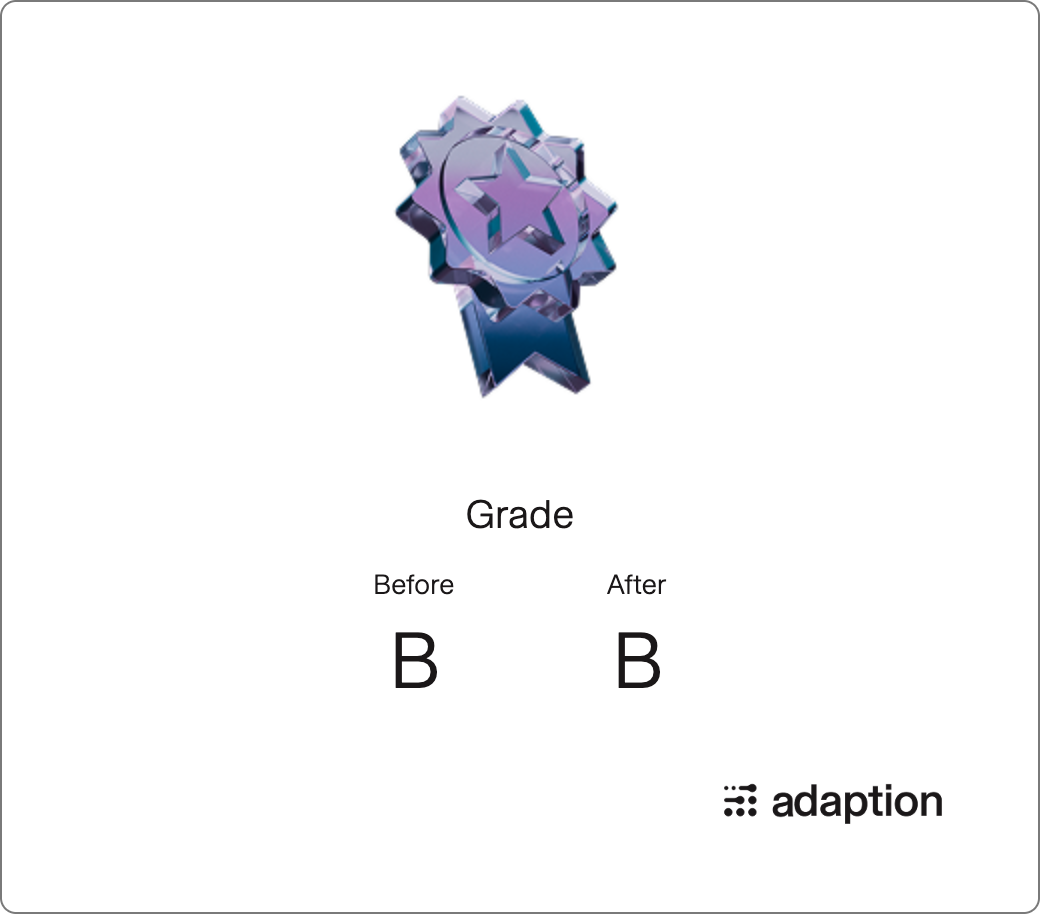
The final quality is B, with a relative quality improvement of 17.1%.
Domain
- Academic-education (52%)
- Language (48%)
Language
- English (58%)
- Esperanto (26%)
- Spanish (12%)
Tone
- Educational (50%)
- Informative (26%)
- Clear (22%)
Evaluation Results
Quality Gains:
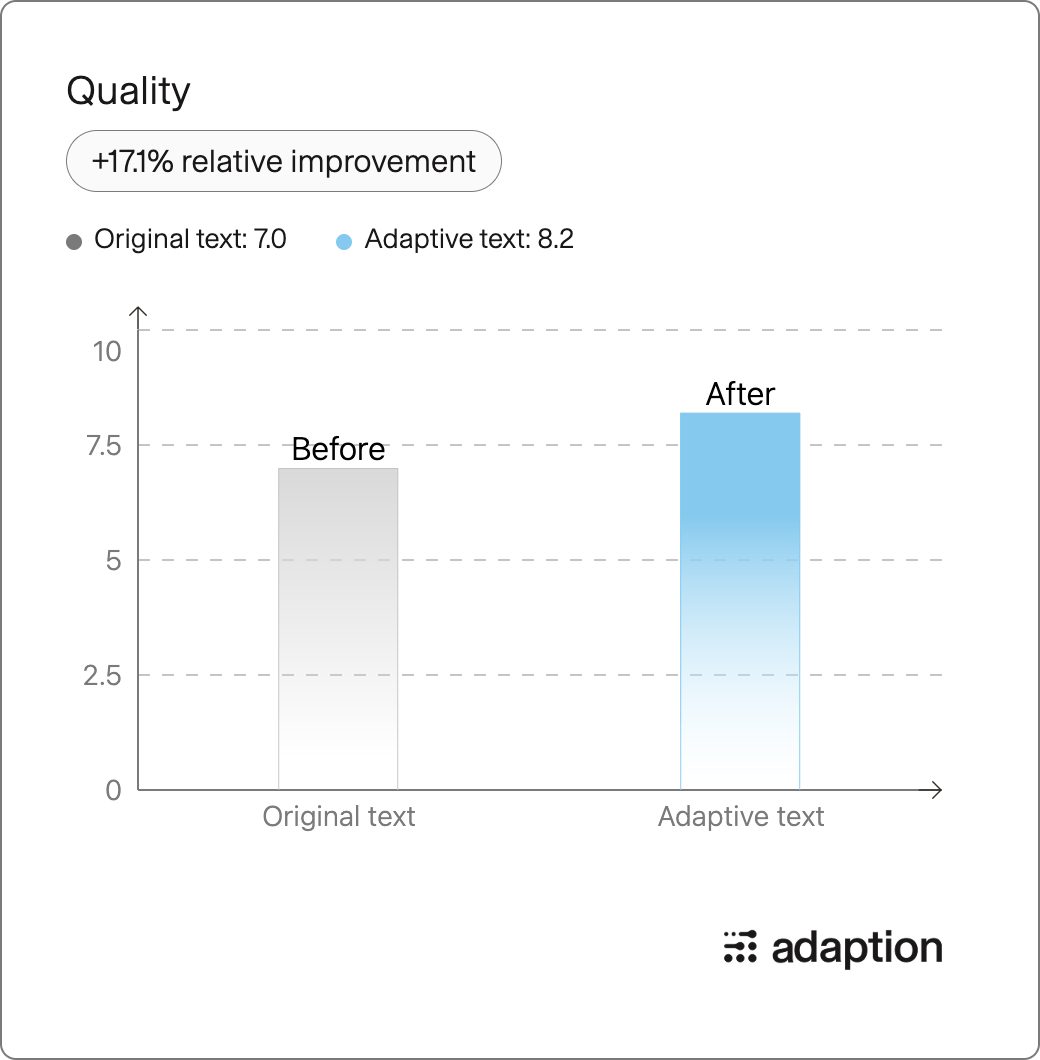
Grade Improvement:
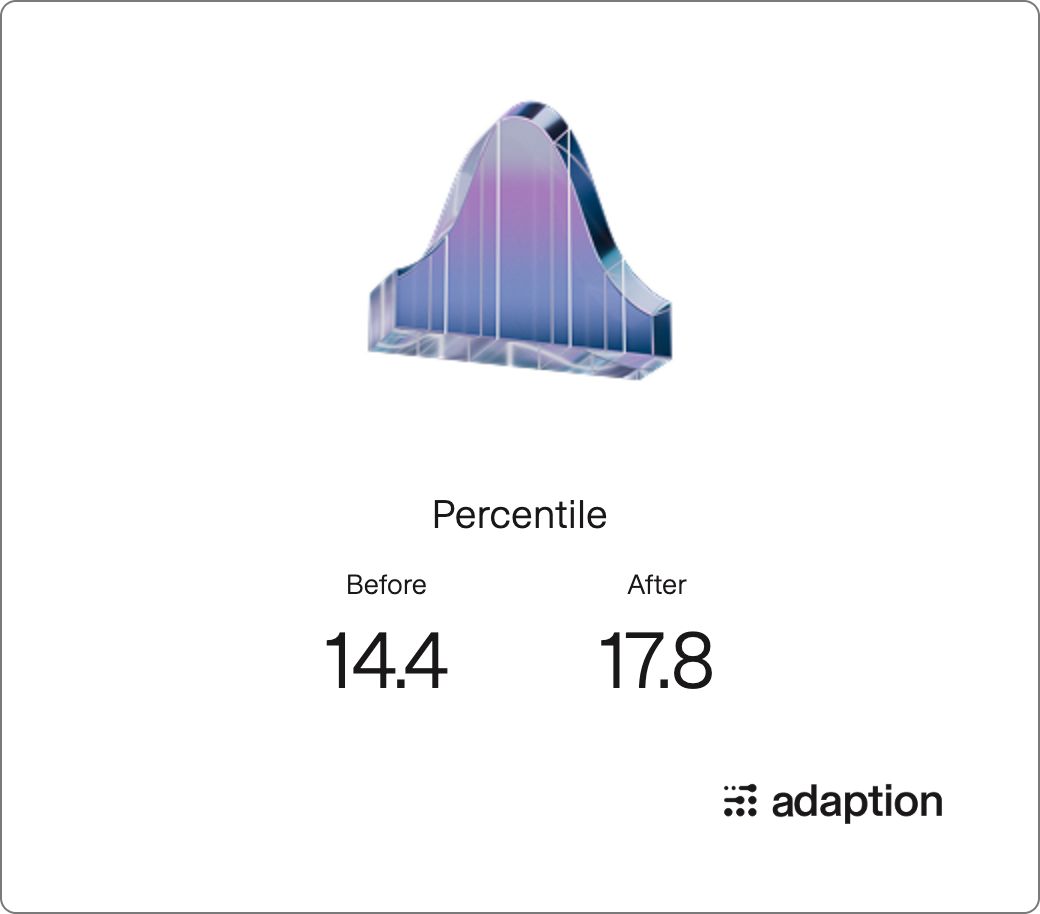
Percentile Chart:
- Downloads last month
- 15